


Last updated: October 19, 2026
Buttock lift surgery, also called a gluteal lift, removes excess skin and some fat, then lifts the remaining tissue to improve the buttocks’ contour. It addresses sagging rather than primarily adding volume. For readers in Tustin, California, Coral Surgery Center (formerly Distinction Surgical Center) is located in Newport Beach, California.
What Is Buttock Lift Surgery, and What Does It Change?
Aging, sun damage, pregnancy, weight fluctuations, and genetics can contribute to buttock sagging. A conventional lift may smooth sagging buttocks, but it does not significantly increase their size.
Does a buttock lift remove skin, add volume, or both?
A conventional lift removes excess tissue. Mayo Clinic’s buttock lift guidance explains that the surgeon removes extra skin and fat and repositions the remaining skin; a lift alone does not add volume. Augmentation with transferred fat or implants is a separate choice that may sometimes be combined with a lift.
How Is a Buttock Lift Different From a Brazilian Butt Lift?
A buttock lift removes sagging skin and raises the remaining tissue, while a Brazilian butt lift, or BBL, transfers fat into the buttocks to add volume. A BBL does not replace skin removal when excess skin is the main concern.
The main differences are:
| Procedure | Main approach | Primary goal |
|---|---|---|
| Conventional buttock lift | Removes excess skin and some fat; lifts remaining tissue | Improves sagging and contour |
| Brazilian butt lift | Uses liposuction and fat transfer | Adds fullness and changes shape |
Can a buttock lift make flat buttocks look fuller?
Removing hanging skin may make the existing shape look firmer, but it does not create substantial new volume. The American Society of Plastic Surgeons’ buttock enhancement guidance distinguishes a traditional gluteal lift from augmentation and notes that some surgical plans use a person’s own tissue or add fat grafting to address fullness. Those additions should not be assumed to be part of a conventional lift.
For a closer look at the distinction, see our guide to BBL steps, recovery, and safety. An educational comparison of surgical and injectable buttock lift options also illustrates why the word “lift” can refer to treatments with different effects.
What are BBL complications?
BBL complications can include infection, uneven results, loss of transferred fat, and fat embolism, which can be fatal. An article on the American Society of Plastic Surgeons’ website explains that fat embolism can occur when injected fat enters the bloodstream. Injection depth matters: fat should be placed in the subcutaneous tissue above the muscle, rather than injected into muscle, where it can enter blood vessels. An American Society of Plastic Surgeons discussion of BBL safety describes ultrasound guidance to help confirm subcutaneous placement and minimize injection into muscle. If you are considering a BBL, ask the surgeon how they keep fat in the subcutaneous plane. The American Society of Plastic Surgeons’ article on travel after a BBL says most surgeons advise patients to expect loss of about 30% of the originally transferred fat cells; the amount varies and can reduce final fullness. These injection-related risks differ from those of a conventional skin-removal lift, although both are surgeries with potential complications.
Who May Be a Good Candidate for a Buttock Lift?
A buttock lift may suit an adult bothered by loose buttock skin after substantial weight loss or changes in skin elasticity. Good candidates generally have stable weight, realistic expectations, and health that permits surgery.
Can a buttock lift help after significant weight loss?
Yes. Weight loss can leave skin that does not contract enough to follow the body’s new contours. A lift can remove some of that excess skin and improve the buttocks’ outline. When loose skin extends to the groin, thighs, or abdomen, a lower body lift can address those areas as well as the buttocks. Our guide to body contouring after weight loss explains how skin-removal options differ.
Should you wait until your weight is stable?
Stable weight helps preserve the contour achieved through surgery. Further substantial weight loss can leave new looseness, while weight gain can change the shape.
What Happens During Buttock Lift Surgery?
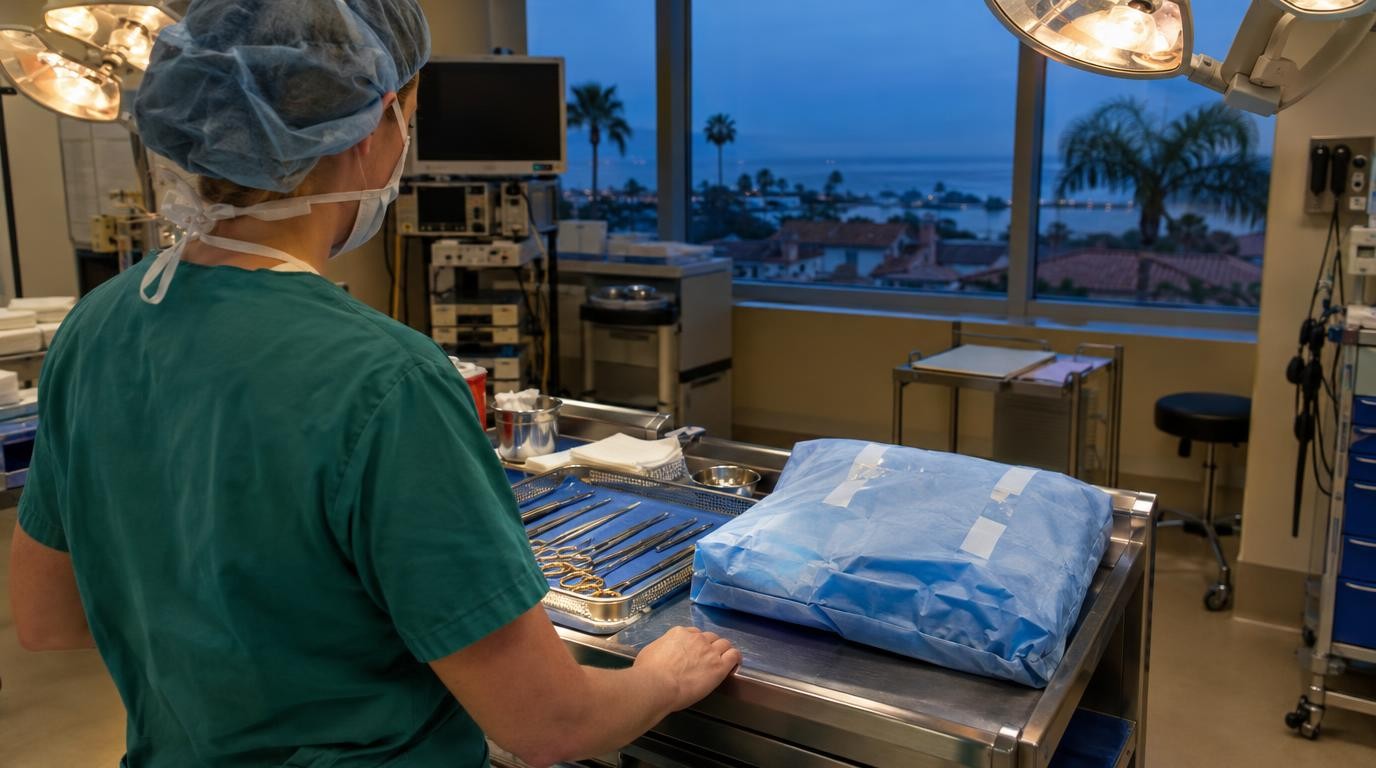
Buttock lift surgery generally involves anesthesia, an incision near the lower back or upper buttocks, removal of excess skin and some fat, and lifting and closing the remaining tissue. Incision placement and the amount removed depend on anatomy and the agreed surgical plan. A lift may be performed alone or alongside other contouring surgery.
Where are the incisions and scars likely to be?
Mayo Clinic describes an incision along the lower back that may extend from hip to hip. The resulting scar follows the incision, but its exact position and length vary with the tissue that needs removal. Before surgery, the planned scar location should be clear, including whether clothing is likely to cover it.
How is excess skin removed and the remaining tissue lifted?
- Anesthesia is given according to the surgical plan.
- The surgeon makes the planned incision and lifts the tissue below it.
- Excess skin and some fat are removed, and the remaining tissue is repositioned.
- The incision is closed and covered with a dressing.
Operating time varies with the extent of surgery. Mayo Clinic notes that a procedure combined with other operations, such as a body lift, can take up to seven hours; that figure should not be taken as the expected duration of an isolated buttock lift. No particular incision pattern or technique should be assumed for an individual patient.
What Is Recovery Like After a Buttock Lift?
Buttock lift recovery requires time for the incision to heal and swelling to subside. Bruising, activity limits, wound care, and follow-up are expected parts of the process. Drains or a compression garment may be used when prescribed. Return to work and exercise depends on healing and the physical demands of each activity.
What care may be needed immediately after surgery?
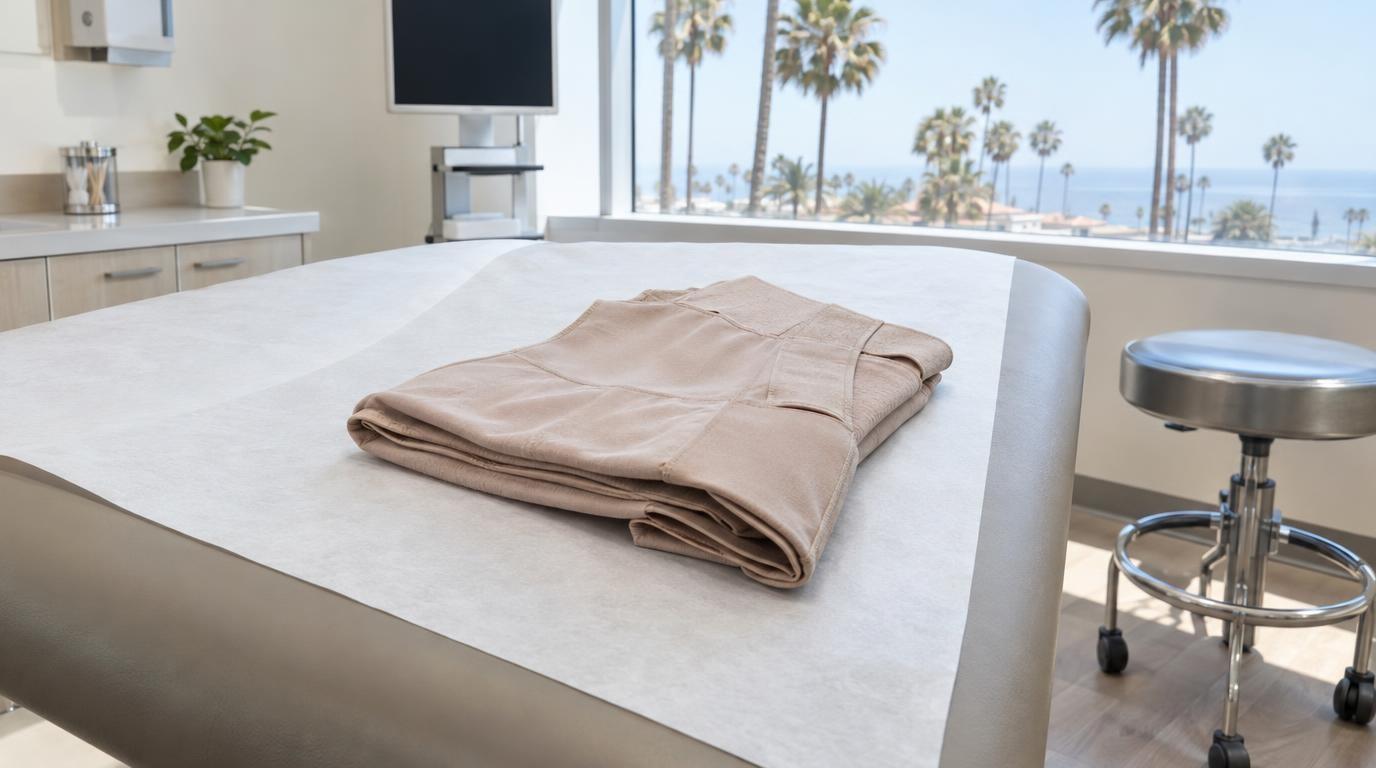
One or more drains may be placed near the incision to carry away excess blood or fluid. Care may include following instructions for cleaning the incision, managing drains if present, and adjusting positions to avoid strain on the wound. Cleveland Clinic’s buttock lift guidance describes recovery as lengthy and notes that sitting and sleeping positions may need adjustment to protect healing incisions.
When can you resume work and exercise?
As a rough planning guide, desk work may be possible after about two to four weeks, while physically demanding work and strenuous exercise may require six to eight weeks or longer. Gentle activity may resume sooner, but your surgeon should set separate return-to-work and exercise milestones based on incision healing and any combined procedures. You may also need to adjust sitting and sleeping positions to protect the incision; unlike BBL precautions, these adjustments are not intended to protect transferred fat.
How Long Do Buttock Lift Results Last?
Swelling must settle before the new contour is fully apparent. Removed skin does not grow back, although additional looseness can develop.
Can weight changes or aging affect the result?
Yes. Cleveland Clinic says buttock lift results tend to be permanent if you maintain your weight. Aging and later weight changes can still alter the contour and firmness; permanent does not mean the shape will remain unchanged.
Will buttock lift scars fade completely?
No. Scars are permanent, although they generally become less noticeable as they mature. How visible they remain depends on the incision, healing, and individual skin characteristics. A meaningful discussion of results includes both the likely contour change and the scar needed to achieve it.
What Are the Risks of a Buttock Lift, and Who Should Avoid It?
A buttock lift carries surgical risks, including bleeding, infection, fluid collection, wound-healing problems, changes in sensation, noticeable scars, blood clots, and anesthesia complications.
In a 2026 retrospective study of a sliding adipofascial-flap buttock lift involving 145 women, 132 of whom also received fat grafting, researchers reported an 8.3% complication rate for the buttock lift procedure alone and a 17.2% overall patient complication rate across all procedures performed. These figures describe that technique and patient group; they are not general rates for all buttock lifts and cannot predict your individual risk.
What complications should you discuss with a surgeon?
Discuss the risks that matter for your health and surgical plan with your own licensed clinician. Swelling and bruising are expected after surgery, but worsening redness, fever, increasing drainage, or a wound that opens needs prompt medical attention. Seek urgent care for chest pain, trouble breathing, severe bleeding, or a newly swollen, painful leg.
When should surgery be postponed or reconsidered?
Surgery may need to wait until your weight is stable, relevant health conditions are controlled, and, if you smoke, you can meet your surgeon’s requirements for stopping before surgery and throughout healing. A clinician must assess your health and surgical plan to determine whether a buttock lift is appropriate or should be postponed.
What Should You Ask at a Buttock Lift Consultation?
A buttock lift consultation should establish whether skin removal matches your goal, what contour change is realistic, and where scars are likely to fall. The discussion should also cover individualized risks, recovery support, and follow-up. Confirm the exact operation proposed rather than assuming every procedure called a “butt lift” removes skin.
How can you tell whether a lift matches your goals?
If loose skin is your primary concern, a skin-removal lift may fit your goal. If added fullness is the goal, fat transfer or implants are volume-adding options. A plan may combine a lift with augmentation when both concerns need treatment.
What should you confirm about the surgical plan and follow-up?
- Whether a conventional skin-removal lift is available and appropriate for you.
- Where the incision and resulting scar are expected to be.
- Whether any additional contouring or volume-adding procedure is proposed.
- What help you may need during recovery and how follow-up will work.
Frequently Asked Questions
Can a buttock lift be an outpatient procedure?
Yes. Mayo Clinic says a buttock lift can take place in a hospital or as an outpatient procedure. The setting depends on your health and the planned surgery.
Do you have to be put to sleep for a buttock lift?
No. Mayo Clinic describes both local anesthesia, which numbs an area of the body, and general anesthesia, which puts you to sleep. The choice depends on your health and the planned operation.
Can a buttock lift be done with a tummy tuck?
Yes. Mayo Clinic says a buttock lift may be performed with a tummy tuck or as part of a lower body lift. The treatment areas and recovery needs depend on the procedures combined.
How can you prepare for recovery at home?
Arrange a ride home and help with daily tasks while your movement is limited. Set up a place to rest where you can follow your surgeon’s sitting and sleeping instructions without straining the incision.
Can a buttock lift improve dimples or uneven skin?
Yes. The American Society of Plastic Surgeons notes that a traditional buttock lift may improve a dimpled or irregular skin surface while removing sagging tissue, but it cannot be expected to eliminate every dimple.
Can liposuction replace a buttock lift for loose skin?
No. Liposuction removes fat but does not remove the loose skin addressed by a traditional buttock lift. The American Society of Plastic Surgeons notes that liposuction is sometimes added to a lift to improve contour.
Is there a nonsurgical alternative to a buttock lift?
Yes. Lasers and injectable fillers may be called nonsurgical butt lift treatments, but they do not remove sagging skin. Using an injectable filler to augment the buttocks is off-label. Cleveland Clinic says nonsurgical options have no recovery time and results may last months to years, but are not permanent.
Is Buttock Lift Surgery the Right Way to Address Sagging Buttocks?
Buttock lift surgery is an option when excess skin, rather than lack of volume, is the main concern. A conventional lift can improve contour by removing and repositioning tissue, but it requires substantial recovery and leaves a scar. Stable weight, health, and realistic expectations all matter when weighing the likely benefit against surgical risk.
If you are considering a lift, contact Coral Surgery Center for a consultation in Newport Beach, California. Our team can review your concerns about loose skin or fullness, explain the available surgical plan, and help you understand what recovery and follow-up would involve.
This information is general and is not medical advice. Talk to a licensed clinician about your own situation before making a treatment decision.
