

Last updated: October 31, 2026
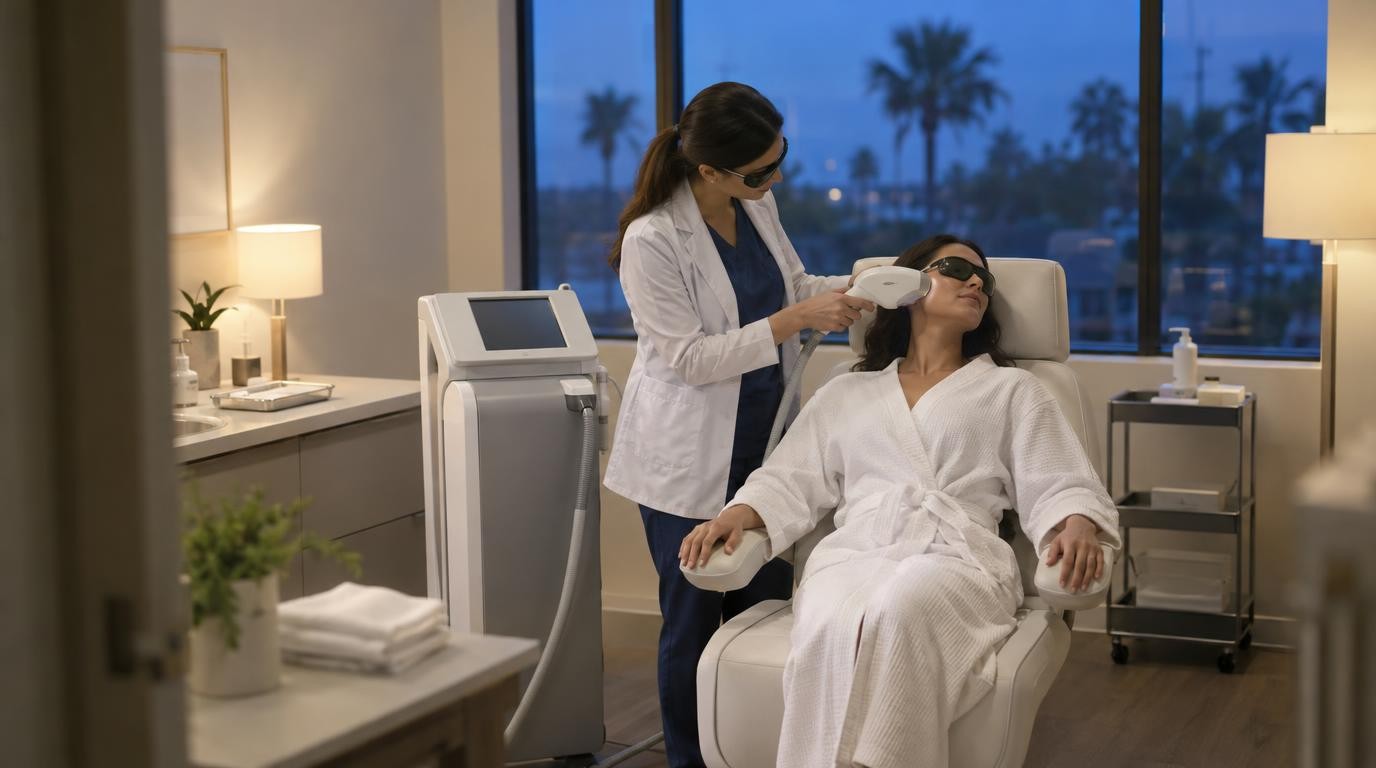
An intense pulsed light photofacial is a nonsurgical treatment that uses broad-spectrum light to reduce the appearance of selected sun spots and facial redness. If you are considering IPL for uneven tone, the most useful starting point is a diagnosis of what is causing the discoloration: different pigment concerns do not respond equally well to light. At Coral Surgery Center, formerly Distinction Surgical Center, in Newport Beach, California, we offer IPL photofacials.
What Is an Intense Pulsed Light Photofacial?
An intense pulsed light photofacial delivers brief pulses of multiple light wavelengths to address visible brown pigment and redness. As Johns Hopkins Medicine explains, IPL is not a true laser; it is also nonsurgical. Treatment does not remove a layer of skin; instead, selected light energy reaches targets within the skin while the surface remains intact.
The term photofacial describes the light-based treatment, not a guarantee that every cause of uneven tone will respond.
How Does an IPL Photofacial Target Sun Spots and Redness?
An IPL photofacial directs light toward brown pigment and visible blood vessels, making selected sun spots and redness reasonable treatment targets. Light absorbed by those targets produces heat that can gradually reduce their appearance. The cause of a mark matters: sun-related spots, rosacea-related redness, and melasma are different conditions that need different treatment decisions.
The American Board of Cosmetic Surgery’s skin resurfacing guidance describes IPL as broad-wavelength light used primarily for red and brown discoloration. In clinical practice, identifying the concern before selecting settings is more useful than treating every brown patch as sun damage.
Which Skin Concerns Can IPL Address?
IPL may improve sun spots, freckles, some age spots, uneven tone, small visible vessels, and certain types of facial redness. EyeWiki, an American Academy of Ophthalmology resource, describes improvement in visible vessels and persistent redness associated with rosacea, while noting uncertainty about long-term outcomes. IPL does not cure rosacea or prevent future flares.
Fine lines and texture may also change, but those improvements are less predictable than improvement in suitable pigment or vascular targets. Enlarged pores should not be treated as an assured IPL outcome. Melasma needs particular caution rather than a promise that IPL is a dependable first-line treatment.
Who Is a Good Candidate for an IPL Photofacial?
A good IPL candidate has a clearly identified pigment or redness concern and skin that can be treated with an acceptable risk of unwanted pigment change. Assessment should include skin tone, recent sun exposure, current irritation, relevant medications, and medical history. The same visible brown mark can call for a different approach depending on its cause.
Can People With Melasma or Deeper Skin Tones Have IPL?
IPL may be considered for some people with deeper skin tones after an individual assessment; melasma warrants particular caution and is not a routine IPL target. Melasma can worsen after light or heat exposure, while surrounding pigment in deeper skin tones may absorb light and increase the risk of post-treatment light or dark spots. We may recommend a different approach when these risks outweigh the likely benefit.
A 2026 retrospective study in the Journal of Cosmetic Dermatology found a lower observed likelihood of favorable response among participants with Fitzpatrick type IV skin. The study’s association is not a prediction for an individual patient.
The skin-tone finding from that study is:
| Measure | 2026 Journal of Cosmetic Dermatology finding |
|---|---|
| Response among Fitzpatrick type IV participants | Odds ratio 0.12; p = 0.001 |
Does IPL Photofacial Really Work?
IPL can improve eligible facial pigment and redness concerns, but the degree of change varies by diagnosis and skin response. EyeWiki summarizes a rosacea series that reported an 83% reduction in redness and a 75% reduction in flushing after an average of 3.6 IPL sessions. Those results describe one series, not the improvement every patient can expect. A 2026 retrospective study also found measurable improvement in redness, pigmentation, and wrinkle indices among people who completed a treatment series; it does not guarantee a result for everyone.
The 2026 retrospective study used VISIA imaging to assess erythema, pigmentation, and wrinkles, alongside an aesthetic improvement scale. Its results are useful real-world evidence, but the retrospective design cannot establish that the treatment schedule caused a better outcome.
Key findings from the 2026 Journal of Cosmetic Dermatology study include:
| Study measure | 2026 Journal of Cosmetic Dermatology finding |
|---|---|
| Participants and treatment history | 236 patients who received at least six IPL sessions between 2020 and 2025 |
| Imaging results | Improvement in erythema, pigmentation, and wrinkle indices; all p < 0.05 |
| Regular treatment intervals | Associated with better response; odds ratio 13.62 |
| More total sessions | Associated with better response; odds ratio 3.80 |
How Many IPL Sessions Might Be Needed?
For visible blood vessels, the American Academy of Dermatology says most patients see a 50% to 75% reduction after 1 to 3 laser or light treatments, usually spaced 3 to 4 weeks apart. Those figures cover laser and light treatments broadly, not a guaranteed IPL response or a required IPL schedule. For IPL specifically, EyeWiki describes a facial-vessel series averaging 4.1 treatments. That study average is not an ideal number for every patient; the target concern and skin response help determine a plan. The 2026 Journal of Cosmetic Dermatology study included only patients who received at least six IPL sessions, so it cannot establish an ideal number of sessions or compare six sessions with one.
What Happens During an IPL Photofacial Appointment?
An IPL photofacial generally follows these steps:
- The treatment area is assessed and settings are selected.
- Protective eyewear is put in place. Cooling gel may be applied, depending on the equipment and technique.
- Brief pulses of light are delivered over the planned area.
- Afterward, the patient receives instructions based on the skin’s response and the areas treated.
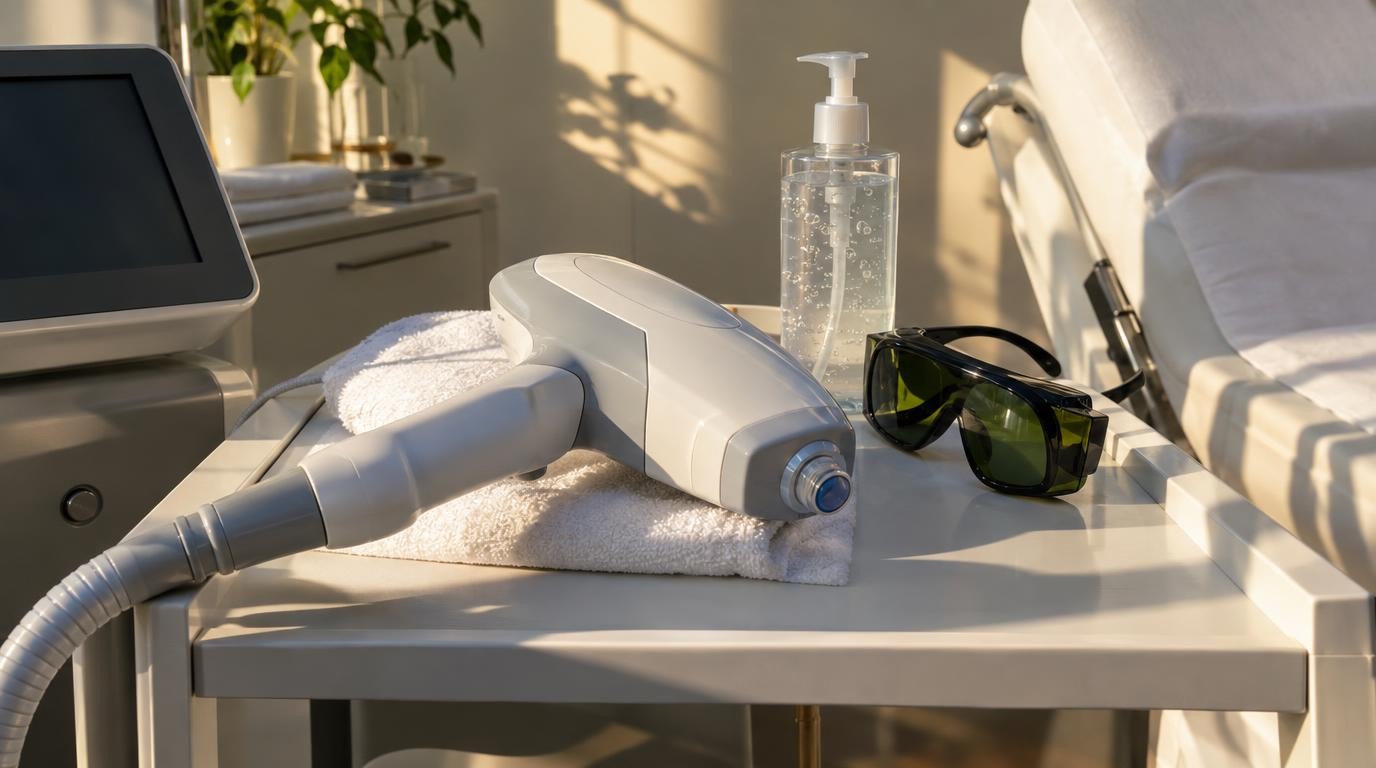
Eye protection is essential because light delivered near the face can injure the eyes. Sensations during IPL vary with the device, settings, and area treated.
What Is Recovery Like After an IPL Photofacial?
Many people can return to normal activities the same day after IPL, although warmth, redness, or mild swelling may last several hours to a few days. Treated brown spots can look darker before fading, which may take several days to about two weeks. Recovery varies with the skin, settings, and treatment area; follow your treating clinician’s instructions rather than assuming there will be no downtime.

Follow the treating clinician’s directions for cleansing and skin products, avoid additional sun exposure while the skin settles, and protect the treated area when outdoors. The American Society for Dermatologic Surgery notes that significant changes may not be visible until several weeks after treatment, so assess pigment improvement over time rather than immediately afterward. For a broader look at what may change after treatment, see this educational overview of IPL photofacial results, risks, and recovery.
What Is the Downside of IPL Treatment on the Face?
The main downsides of facial IPL are temporary discomfort, redness, swelling, and possible darkening of treated pigment. Burns and blisters are less common but can lead to scarring; lasting light or dark spots are also possible. Eye exposure is another reason proper protection matters. In the 2026 retrospective Journal of Cosmetic Dermatology study, no severe adverse events were reported among 236 participants who had received at least six IPL sessions. That observation cannot rule out rare complications or establish their frequency in other patients. Screening reduces avoidable risk but cannot guarantee an unchanged skin response.
An article on the American Academy of Ophthalmology website reports that IPL can cause ocular complications. Seek urgent medical assessment for vision changes after treatment. Severe or worsening pain, substantial blistering, or signs of infection also warrant prompt medical attention.
Who Should Avoid or Postpone IPL Treatment?
Recent tanning or sunburn, active skin irritation, and medications that increase light sensitivity may call for postponement or a different approach. Melasma and skin-tone-related pigment risks require particular care rather than a blanket assurance of safety. Discuss your own medications, skin history, and risks with your clinician before treatment.
How Long Do IPL Photofacial Results Last?
For visible blood vessels treated with laser or light therapy, the American Academy of Dermatology says results tend to last 3 to 5 years; treated vessels do not reappear, but new ones can form. That estimate covers laser and light treatments broadly, not every IPL photofacial. Sun-spot improvement has no comparable universal timeframe, and new discoloration can develop with sun exposure. IPL also does not prevent rosacea flares, so maintenance depends on the concern treated and whether symptoms return.
The 2026 Journal of Cosmetic Dermatology study associated regular treatment intervals with better outcomes, but it did not establish the best spacing for every patient. Consistent sun protection helps preserve improvements in sun-related pigment. Redness linked to a continuing condition may need an ongoing management plan even when visible vessels improve.
How Does IPL Compare With Laser Treatments or Chemical Peels?
IPL, laser treatments, and chemical peels work differently. The diagnosis and treatment goal help determine which option may fit:
| Option | How it works | Potential fit and limitation |
|---|---|---|
| IPL photofacial | Uses pulses of broad-spectrum light. | Can address selected sun spots and facial redness; it is not a dependable first-line treatment for melasma. |
| Laser treatment | Uses focused laser light; the target depends on the device. | A condition-specific laser may target a particular vessel, pigment concern, or textural change. |
| Chemical peel | Uses a chemical solution to exfoliate skin. | May address surface texture or some discoloration; it does not specifically target visible blood vessels. |
Coral Surgery Center offers IPL photofacials, laser skin resurfacing, and chemical peels, but their availability does not make any option universally suitable. Readers weighing peels can learn why assessment matters in our guide to chemical peels and professional supervision.
Frequently Asked Questions
Is BBL the same thing as an IPL photofacial?
BBL is one name used for broad-wavelength IPL treatment, but IPL devices can differ in their specifications. Both names refer to light-based approaches used for concerns such as brown discoloration and redness. The provider’s skill and appropriate treatment settings matter more than the brand name.
Can IPL be used to treat acne?
IPL may be used for some acne concerns, but a photofacial planned for sun spots or redness should not be expected to clear breakouts. We would assess your acne and skin before recommending a light-based approach.
Can IPL be used to remove unwanted facial hair?
IPL technology can also be used for hair removal, but a photofacial is planned to address discoloration and redness. We offer laser hair removal as a separate service and can discuss which treatment fits your goal.
How is an IPL photofacial different from a pulsed dye laser for redness?
IPL uses broad-spectrum light to target redness and selected brown spots. A pulsed dye laser uses focused light to heat small blood vessels, making it an option for rosacea-related redness and spider veins.
Can IPL help rosacea redness if creams do not remove visible blood vessels?
IPL may reduce visible blood vessels and persistent redness associated with rosacea, including symptoms that do not respond to medical therapies. Creams may help other rosacea symptoms without clearing visible facial vessels. IPL does not cure rosacea; ongoing treatment may still be needed for other symptoms or flares.
Is an IPL photofacial FDA approved?
FDA 510(k) clearance applies to a particular IPL device and its intended uses, not to photofacials as a category. An FDA 510(k) summary reports that one IPL device was found substantially equivalent to a legally marketed device. Clearance is not FDA approval, and that device’s clearance does not establish the regulatory status or cleared uses of another IPL device.
What Should You Ask Before Choosing an IPL Photofacial?
Before choosing an IPL photofacial, ask what is causing your discoloration, whether IPL suits your skin tone, and how progress will be assessed. Also ask what reactions to expect, how to care for your skin afterward, and whether a treatment series makes sense for your goal. Clear answers support an informed decision.
- Is the concern a sun spot, a visible vessel, rosacea-related redness, melasma, or something else?
- How do my skin tone, sun exposure, and medical history affect suitability?
- What improvement is reasonable to expect, and how will we evaluate it?
- What aftercare should I follow, and what symptoms require prompt attention?
If you are considering an IPL photofacial in Newport Beach, schedule a consultation with our team at Coral Surgery Center to discuss your skin concerns and which treatment we offer may fit your goals.
This information is general and is not medical advice. Talk to a licensed clinician about your own situation before making a treatment decision.
