

Last updated: November 5, 2026
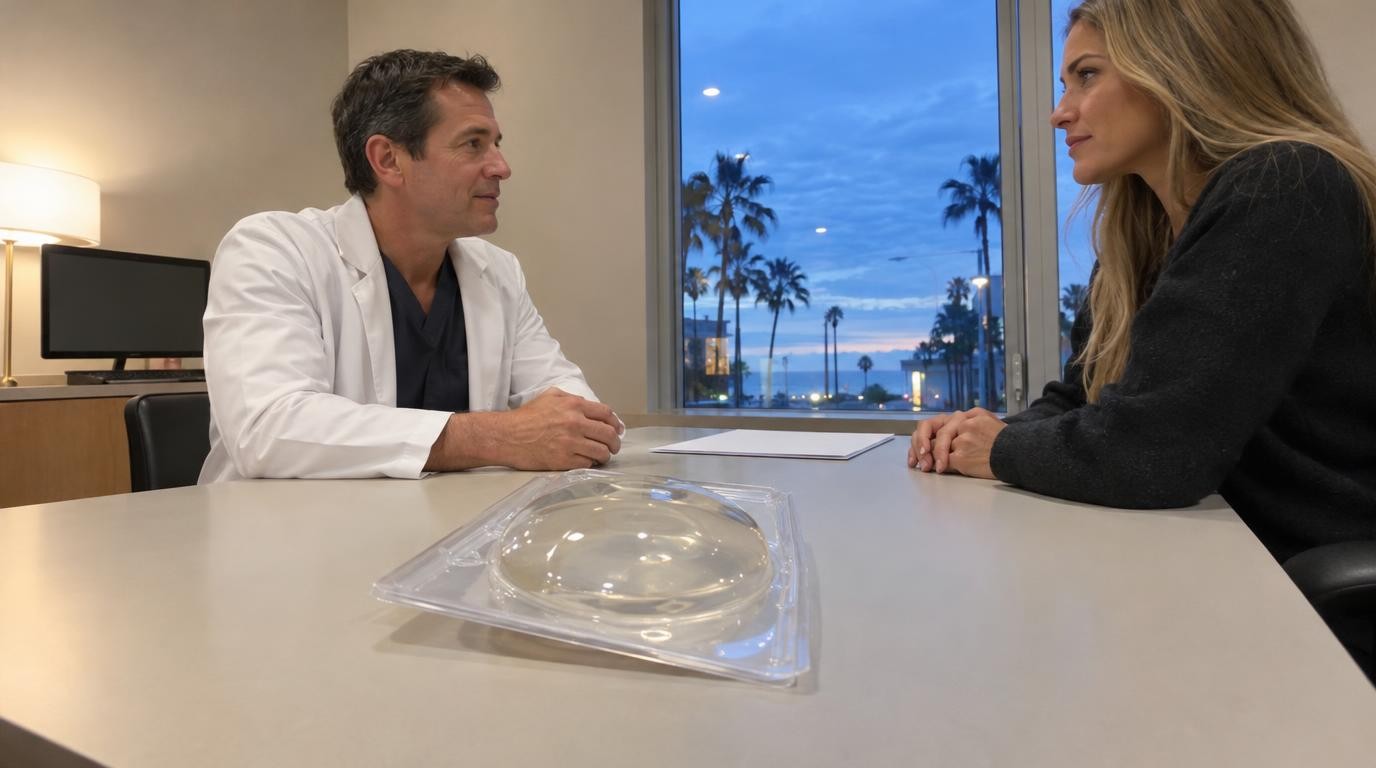
Revision breast augmentation surgery can change an implant or address the surrounding scar tissue, implant pocket, or breast tissue after an earlier augmentation. At Coral Surgery Center, formerly Distinction Surgical Center, we offer breast revision for concerns such as firmness, implant shifting, sagging, or a change in preferred size.
What Does Revision Breast Augmentation Surgery Involve?
Depending on the findings, a surgeon may replace or remove an implant, treat the surrounding scar capsule, reshape the implant pocket, or address sagging breast tissue. A revision may respond to a complication or a changed preference; it does not automatically mean the original surgery failed.
The American Society of Plastic Surgeons emphasizes that breast implant revision is not a standard, identical procedure for every patient.
Can I Get a Breast Augmentation Redo?
Yes. If you have had breast augmentation, you can consider a redo because you are unhappy with the appearance of your breasts or concerned about an implant. Good health, a stable weight, not smoking, and realistic expectations are favorable considerations. An examination can establish what is causing the concern and whether surgery, monitoring, or another approach makes sense for you.
Why Do People Consider Breast Implant Revision?
People consider breast implant revision because an implant feels firm, has shifted, may have ruptured, or no longer suits their preferred size or shape. Breast tissue can also sag while the implant remains in place. Identifying which change is responsible matters because implant replacement alone may not address a problem caused by the pocket or overlying tissue.
A review in Seminars in Plastic Surgery identifies capsular contracture, implant malposition, and sagging of the aging breast as prominent, challenging reasons for revision. Those are reasons to investigate a change, not a way to predict whether any particular patient will need surgery.
What Are Capsular Contracture and Implant Malposition?
A capsule is the layer of scar tissue the body forms around an implant. Capsular contracture occurs when that tissue tightens, potentially causing implant firmness, discomfort, or breast distortion. Implant malposition means an implant has moved from its intended position; the breast may look uneven or the implant may sit too low. The American Board of Cosmetic Surgery’s breast implant revision guide also lists rupture, deflation, and visible rippling among concerns that can prompt evaluation.
Firmness or breast asymmetry does not, by itself, establish a diagnosis.
Can Breast Sagging Affect Implants Over Time?
Yes. Skin and breast tissue can change with aging, pregnancy, or weight changes, even if an implant has not moved. The resulting breast sagging may alter how the breast looks around the implant. Separating tissue changes from implant displacement helps determine whether a lift, an implant change, or another approach is worth discussing.
How Does a Surgeon Assess Whether You Need Revision?
A surgeon assesses revision by reviewing your earlier augmentation, listening to your symptoms and goals, and examining the implants and breast tissue. The examination looks at position, firmness, scars, skin, and sagging. If rupture is suspected, further assessment may be appropriate. The aim is to identify the cause of the concern before deciding whether surgery would help.
In clinical practice, the implant cannot always be evaluated in isolation: the capsule, implant pocket, and tissue covering the implant all affect the breast’s shape. The Seminars in Plastic Surgery review emphasizes planning for those structures together.
What Should You Bring to a Breast Revision Consultation?
Bring any available implant records, details of the original operation, and information about later breast procedures. Make note of when a change began, whether it has progressed, and what outcome matters most to you. Prior records can clarify the implant details, while your symptom history and examination help distinguish a device concern from a change in surrounding tissue.
What Can the Revision Procedure Change?
Revision usually begins with an incision to access and remove the existing implant; the original scar can often be used when it suits the surgical plan. If indicated, the surgeon then treats the surrounding scar capsule or reshapes the implant pocket before placing a replacement implant or leaving implants out. A lift or reduction adds steps to reshape breast tissue. The exact steps and anesthesia depend on your examination findings and goals; not every technique is appropriate for every patient.
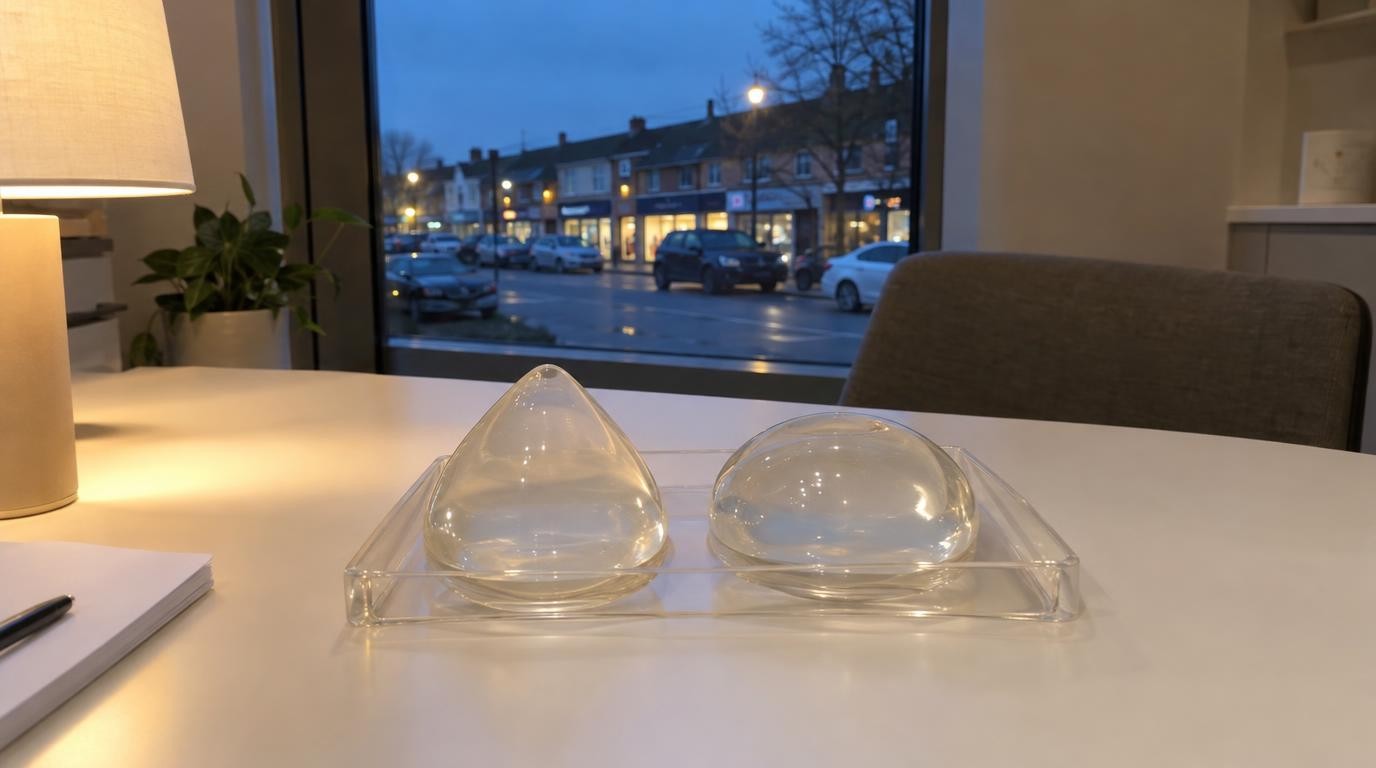
If you want smaller breasts, exchanging an implant for a smaller one reduces implant-based volume, but it does not reduce your own breast tissue. A breast reduction may be discussed alongside revision when your goal is a smaller overall breast, depending on the examination. A shifted implant or a tight capsule raises different surgical questions.
When Might Implant Exchange, Pocket Adjustment, or Capsule Surgery Be Considered?
Implant exchange may be considered for a size or implant concern. Pocket adjustment may help address malposition by changing where the implant sits, while capsule treatment may be discussed when scar tissue has tightened around an implant. If rupture is suspected, the surgeon must assess the implant and surrounding tissue before recommending a plan.
When Might a Breast Lift Be Discussed?
A breast lift may be discussed when sagging skin and tissue contribute to the shape concern. Changing an implant does not necessarily lift breast tissue that has descended around it. Coral Surgery Center offers breast lift and breast revision services; whether combining approaches makes sense depends on the examination. Learn more about the separate role of breast lift techniques.
Can Breasts Look Good After Implant Removal?
Breasts can have a pleasing shape after implant removal, but no particular appearance can be promised. Skin elasticity, remaining breast tissue, prior implant size, and existing sagging influence the result. Removal takes away implant volume, so a consultation should address both your preference to keep or avoid implants and the shape you can realistically expect.
The American Board of Cosmetic Surgery’s implant removal guide explains that breasts may appear flatter or more sagged after removal. A lift may be an option when tissue position is a concern, but removal alone may also fit a patient’s goals.
How Does Implant Removal Differ From Implant Replacement?
Breast implant removal takes the implant out without placing a new one. Replacement maintains implant-based volume while allowing a change in implant choice. Either discussion may include whether sagging warrants a lift. The appropriate choice depends on your tissue, the condition of the existing implant and capsule, and whether you want implants going forward.
These options differ in the volume they retain and the tissue they address:
| Approach | What it changes | Consideration |
|---|---|---|
| Implant replacement | Maintains implant-based volume; size or type can change. | Replacing an implant does not necessarily correct sagging breast tissue. |
| Implant removal | Leaves no implant in place. | Breast volume decreases, and sagging may become more apparent. |
| Removal with a lift | Removes the implant and reshapes sagging tissue. | A lift may require additional incisions and recovery. |
| Removal with fat transfer | Adds some volume using transferred fat. | The American Board of Cosmetic Surgery describes about one cup size of added volume after implant removal, but not all transferred fat survives, and another grafting procedure may be needed. Recovery also involves the liposuction site. |
What Is Recovery Like After Breast Augmentation Revision?
Recovery after breast augmentation revision depends on the work performed. An implant exchange, capsule treatment, pocket adjustment, and breast lift can involve different incisions and activity limits. If revision includes a lift, Mayo Clinic says the breasts will likely be swollen and bruised for about two weeks. Your operating surgeon’s plan should guide sleep position and activity rather than a universal recovery schedule.
How Long Do You Have to Sleep on Your Back After Breast Augmentation or Revision?
There is no single back-sleeping duration that applies to every breast augmentation or revision. Follow your operating surgeon’s instructions for the procedure you had and ask when you can resume side or stomach sleeping. If your revision includes a lift, the American Board of Cosmetic Surgery’s breast lift guide describes sleeping on your back for the first several weeks or longer; that lift guidance is not a universal rule for augmentation or revision without a lift.
When Can You Return to Normal Activities?
Return to activities is gradual and depends on the operation and how you heal. For a breast lift, Cleveland Clinic says many patients return to desk work and gentle walking about a week afterward, while restrictions on vigorous activities, including lifting and exercise, may last up to six weeks. A revision involving implant or pocket work may have a different schedule.
What Results Can You Expect From Revision Surgery?
Revision surgery can aim to improve implant position, breast softness, size, or symmetry, depending on the underlying concern. An improvement is not a guarantee of perfectly matched breasts or a permanent shape. Implant characteristics, existing tissue, scars, and healing all affect the outcome, and early swelling can make the result difficult to judge.
The American Board of Cosmetic Surgery notes that many patients keep their implants for 10-15 years or longer without complications or an exchange, but implants are not lifetime devices. Breast tissue and appearance can continue to change, and further surgery may eventually be needed. Maintaining a consistent weight, living a healthy lifestyle, and protecting your skin from sun exposure may help preserve your result.
A useful goal is specific: for example, addressing a displaced implant is different from wanting a smaller overall breast. Explaining which feature bothers you most helps the surgeon discuss what a proposed procedure may change – and what it may not.
Will Revision Fix Unevenness, Firmness, or Implant Rippling?
Revision may improve unevenness caused by implant position or firmness caused by a tight capsule. When there is little tissue covering an implant, fat grafting may help soften visible implant edges or ripples without removing the implant for an appropriately selected patient. It cannot guarantee that rippling will disappear. Residual asymmetry, rippling, visible scars, or later changes remain possible even after a well-planned procedure.
What Are the Risks, and Who May Need to Delay Revision?
Breast revision surgery carries risks including bleeding, infection, anesthesia-related problems, wound-healing difficulties, and changes in sensation. Persistent asymmetry or a return of implant or capsule problems is also possible. The Cleveland Clinic’s breast implant removal guide describes breast implant-associated anaplastic large cell lymphoma (BIA-ALCL) as a rare cancer of the scar tissue around an implant that is associated with textured implants. Active infection, unresolved medical concerns, or incomplete healing after a recent operation may call for further evaluation or postponement before elective surgery.
The American Society of Plastic Surgeons’ candidate guidance lists physical health, a stable weight, not smoking, and realistic expectations as favorable considerations for revision. Discuss your medical history, symptoms, and the risks of the proposed procedure with your own clinician before making a treatment decision.
What Symptoms Should Be Evaluated Promptly Before Planning Revision?
New or worsening breast pain, significant swelling, redness or warmth, fever, drainage, or a sudden change in breast shape warrants prompt clinical assessment rather than self-diagnosis. A suspected rupture also needs evaluation, even when the change is not painful. Seek urgent medical care for severe symptoms or rapidly worsening swelling.
Frequently Asked Questions
Do breast implants have to be replaced every 10 years?
No. An implant’s age alone does not establish whether you need replacement. Ask your clinician about appropriate implant monitoring, and have new symptoms or changes evaluated rather than scheduling surgery solely because an implant has reached its tenth year.
How can I tell if a breast implant has ruptured?
A saline implant may visibly deflate, while a silicone gel implant rupture may need MRI or ultrasound to detect, according to an article on the American Board of Cosmetic Surgery’s website. An appearance change alone cannot confirm what happened. Contact your clinician for an evaluation if you suspect a rupture, even without pain.
Will breast implant revision leave a new scar?
Not necessarily in a new location. Revision incisions are often placed along the original scar, such as the fold beneath the breast, according to the American Board of Cosmetic Surgery. Whether that incision can be reused depends on the planned surgery; a lift or more extensive reshaping may require additional incisions and scars.
What if I do not have records of my original implants?
You can still arrange an evaluation. Share what you remember about your first surgery, any later breast procedures, and when your concerns began. Your examination can help determine whether further assessment is needed; missing records do not mean you need revision.
Why do my implants move when I flex my chest muscles?
Implant movement during chest-muscle flexion can be animation deformity, particularly when implants were placed beneath the muscle, according to the American Board of Cosmetic Surgery. Movement alone does not establish the cause or mean surgery is necessary.
Can I wait until after implant removal to decide on a breast lift?
Yes. Some patients wait to see how their tissues settle after implant removal before deciding on another procedure, according to the American Board of Cosmetic Surgery. Others combine removal and a lift. Your skin elasticity, breast shape, and willingness to have a separate surgery can guide that choice.
Is it worth having breast reconstruction after mastectomy?
That is a personal decision, and postmastectomy reconstruction is different from revision of a prior cosmetic augmentation. Johns Hopkins Medicine explains that reconstruction can use implants or your own tissue and can be done during mastectomy or later. Restoring a breast shape may matter to you, but reconstruction is optional. Mayo Clinic notes that a reconstructed breast will not look or feel exactly like the original and that choosing a flat closure is also an option. Discuss your choices with your cancer and reconstructive surgery team.
How should I prepare for the first day after revision?
Ask your surgical team whether you will need a ride home and someone to stay with you, particularly if you will receive anesthesia. Before surgery, confirm your instructions for dressings, medications, and whom to contact with a recovery concern. The plan depends on the operation you have.
How Do You Decide Whether Revision Is Right for You?
Decide whether revision is right for you by identifying the change that concerns you, gathering prior implant information if available, and comparing your goals with the examination findings. Ask which options address the implant, capsule, pocket, or breast tissue; what each option cannot reliably change; and how the proposed surgery would affect your recovery and risks.
- Describe the specific symptom or appearance change you want assessed.
- Bring available records from your earlier augmentation.
- Review the examination findings and realistic choices, including whether surgery is needed.
- Weigh the proposed plan’s likely recovery and risks alongside what it can realistically change.
If you are considering breast revision and traveling from Laguna Beach, contact Coral Surgery Center in Newport Beach, California, to arrange a consultation. Our team can help you understand the findings and available choices without assuming that another operation is necessary.
This information is general and is not medical advice. Talk to a licensed clinician about your own situation before making a treatment decision.
