


Last updated: October 7, 2026
An operation for hernia repair returns protruding tissue to its proper position and repairs the weakness in the abdominal wall, sometimes with mesh reinforcement. Open, laparoscopic, and robotic surgery provide different ways to reach and repair that weakness; the right choice depends on the hernia and the person having surgery. Coral Surgery Center (formerly Distinction Surgical Center) offers hernia repair in Newport Beach, California.
What is an operation for hernia repair, and how does it work?
Most hernias occur in the abdomen or groin, where tissue pushes through a weakness in the tissue wall. Cleveland Clinic’s hernia surgery guide identifies open, laparoscopic, and robotic repair as the main approaches.
What symptoms might lead someone to consider hernia repair?
A groin lump or abdominal bulge, particularly one accompanied by groin pain or physical discomfort, is a reason to seek an assessment. A hernia may become more noticeable during activities that put pressure on the abdomen. Belly pain alone, however, does not establish a hernia diagnosis; pain can have other causes that require a different evaluation or treatment.
Does every hernia need an operation?
No. A surgeon may discuss observation with some men who have an inguinal hernia that causes few or no symptoms. The plan depends on the type of hernia and the risks of both observation and surgery. Mayo Clinic’s guidance on inguinal hernias notes that painful or enlarging hernias usually need repair to relieve discomfort and help prevent complications. For some people being observed, a clinician may suggest a properly fitted supportive truss to ease symptoms; it does not repair the hernia.
How do open, laparoscopic, and robotic hernia repairs differ?
A 2025 systematic review in the Journal of Clinical Medicine included 54 studies comparing approaches to inguinal hernia repair. Its authors found robotic repair to be a safe and effective option for groin hernias while emphasizing that open repair remains important in particular circumstances. The review found similar overall numbers of complications with robotic and open repair, but said complications involving the robotic platform were more consequential in a minority of cases. It does not establish robotic repair as universally superior.
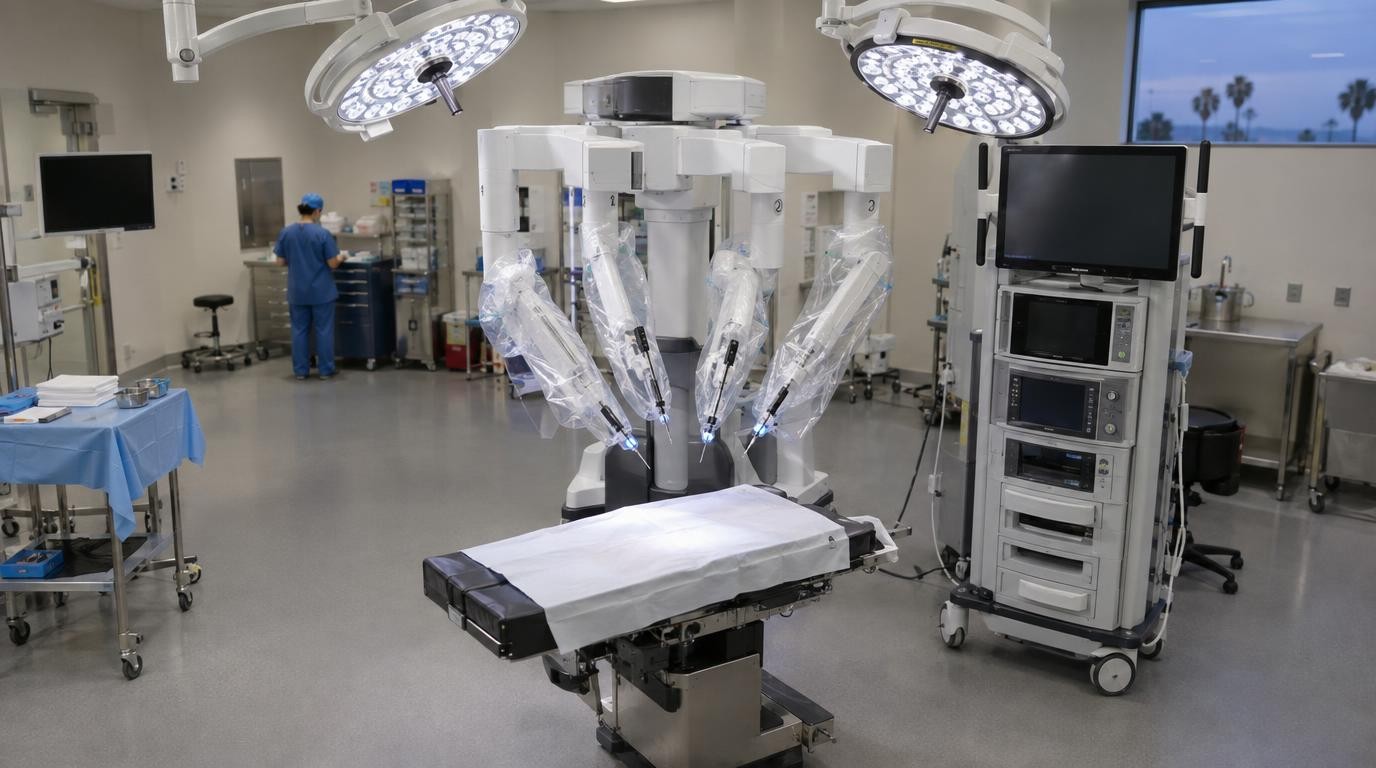
The main procedural differences are:
| Approach | How the surgeon reaches the hernia | Consideration |
|---|---|---|
| Open | An incision near the hernia | Can be appropriate when direct access is needed or a minimally invasive approach does not suit the repair |
| Laparoscopic | Small incisions, a camera, and long instruments | May allow an earlier return to regular activities for some patients |
| Robotic | Small incisions and surgeon-controlled robotic instruments | Offers a minimally invasive way to perform a repair; the robot does not operate independently |
How does open hernia repair work?
In open hernia repair, the surgeon makes an incision near the hernia, returns the protruding tissue, and repairs the weakened area with stitches, often adding mesh. The anesthesia plan can vary. For an inguinal hernia, Mayo Clinic notes that open repair may be performed with local anesthesia and sedation or with general anesthesia.
How does laparoscopic hernia repair work?
In laparoscopic hernia repair, a camera provides a view through a small incision while the surgeon works with instruments inserted through other small incisions. The surgeon repairs the defect and may place mesh. Compared with open inguinal repair, a minimally invasive approach may mean less discomfort and a quicker return to regular activities, though individual results vary.
How does robotic hernia repair work?
In robotic hernia repair, the surgeon uses a console with three-dimensional images of the operative area to control instruments attached to robotic arms. The approach can be used for a small hernia or a more extensive abdominal wall reconstruction, depending on the case.
Which hernia repair approach might suit you?
The suitable approach depends on the hernia’s location, size, and complexity, any previous repairs, overall health, and the surgeon’s experience with the technique. A small initial groin hernia and a complex abdominal wall hernia may call for different plans. The goal is a sound repair that fits the patient, not simply the newest procedure.
What is the newest procedure for repairing hernias?
Robotic repair is a newer minimally invasive option. According to Cleveland Clinic’s robotic hernia surgery guide, its first reported use in humans was in 2007.
What is the best age to get hernia surgery?
For adults, there is no single best age for hernia repair; symptoms, growth, and personal surgical risk guide timing. In children, MedlinePlus’s umbilical hernia repair guide says umbilical hernias often close by age 3 or 4; repair may be needed if one has not closed by then.
What happens before and during a hernia repair operation?
Before surgery, the team reviews your health and prior operations to plan the repair and anesthesia. The operative steps depend on the hernia’s location and complexity.
How does a surgeon confirm the hernia and plan the repair?
A consultation usually includes a discussion of symptoms and a physical examination. If an inguinal hernia is not readily apparent, Mayo Clinic notes that ultrasound, CT, or MRI may help clarify the diagnosis. For a complex hernia or one near a previous surgical incision, Mayo Clinic’s discussion of complex hernia planning explains how scans and past surgical notes can guide the repair.
Hernia repair closes a defect in the abdominal wall. A tummy tuck removes excess abdominal skin and may tighten abdominal muscles, but it should not be assumed to repair a hernia. Our tummy tuck overview explains that separate operation.
What happens to the tissue and abdominal wall during surgery?
Across open, laparoscopic, and robotic approaches, the main steps are:
- Access the hernia through an incision or small incisions.
- Return protruding tissue to its normal position.
- Strengthen the weakened wall with stitches or surgical mesh, as appropriate.
- Close the incision or incisions.
How painful is a hernia repair surgery?
Anesthesia prevents surgical pain during hernia repair; soreness afterward is common. For an inguinal repair, MedlinePlus’s inguinal hernia repair guide describes general, regional, and local anesthesia with medicine to relax you as possible options. Cleveland Clinic notes that pain relievers may be needed for several days up to a few weeks after surgery. Discomfort varies by repair and patient; no approach guarantees a painless recovery.
What discomfort is common after hernia repair?
Tenderness around the incisions and soreness in the repaired area can occur as healing begins. According to NIDDK’s inguinal hernia guide, pain after inguinal repair is typically mild and goes away within 2 weeks after surgery. Cleveland Clinic’s discussion of abdominal wall reconstruction notes that ventral and complex abdominal wall repairs can involve more pain and a longer recovery, whether the approach is open, laparoscopic, or robotic. Individual experiences vary. Severe or worsening pain warrants a prompt call to the surgical team rather than an assumption that it is routine healing.
How long does recovery take after hernia repair?
The hernia’s location and complexity and the operative approach affect recovery. Minimally invasive inguinal repair may allow an earlier return to regular activities than open repair, while recovery after a complex abdominal wall repair can take longer.

When can you return to normal activities after hernia repair?
Walking is often encouraged soon after surgery. According to NIDDK’s inguinal hernia guide, many people return to work and daily activities within 3 to 5 days after inguinal hernia surgery. Mayo Clinic notes that resuming regular activities after open inguinal repair may take several weeks.
What activity restrictions should you ask your surgeon about?
Discharge instructions should cover incision care, walking, lifting, exercise, driving, work, and follow-up. If you are planning another abdominal procedure, a tummy tuck recovery timeline describes a different operation; its activity milestones should not be applied to hernia repair.
How serious is a hernia repair surgery, and who should not have it?
According to Cleveland Clinic’s overview of hernias, a routine, uncomplicated hernia repair is generally a relatively minor operation. Most repairs are outpatient, while complex repairs may require a hospital stay; emergency repair can be more serious. The risks depend on your hernia and overall health.
Mayo Clinic’s discussion of complex hernia planning reports that a 2023 American Hernia Society practice advisory considers a body mass index (BMI) above 45 to 50 prohibitive for elective ventral and abdominal hernia repair. This is not a universal cutoff for every hernia or patient; surgical planning is individualized. Serious or unstable medical conditions may also need assessment or treatment before elective surgery.
What are the risks and side effects of hernia repair?
Possible complications include bleeding, infection, difficulty emptying the bladder after groin repair, fluid or blood collections, persistent pain, and recurrence. MedlinePlus’s ventral hernia repair guide describes bowel injury as a rare complication of ventral repair. Anesthesia carries its own risks, and mesh, when used, can become infected or fail.
For men having groin repair, nerve injury or disrupted blood flow can cause testicular pain or infertility. Pain during sex is also a possible longer-term complication of groin repair. Cleveland Clinic’s hernia surgery guide reports a 0.3% to 7.2% rate for testicular complications collectively; that range is not an infertility rate.
An article on Cleveland Clinic’s site about longer-term effects reports the following estimates for inguinal hernia repair; they should not be applied to every type of hernia.
| Outcome after inguinal repair | Cleveland Clinic estimate | When assessed |
|---|---|---|
| Minor pain or discomfort | About 10% to 15% of people | One year after surgery |
| Seeking care to manage pain | About 1% to 3% of people | One year after surgery |
Discuss your own health conditions, anesthesia risks, and the benefits and drawbacks of the proposed repair with your licensed clinician.
When do hernia symptoms need urgent medical attention?
Seek urgent medical evaluation if a hernia bulge suddenly becomes painful, cannot be pushed back in, or no longer gets smaller when you lie down. Vomiting, fever, or a blue or darkening bulge raises additional concern. MedlinePlus’s ventral hernia repair guide explains that trapped tissue can lose its blood supply and require emergency surgery.
What results can you expect after hernia repair?
Hernia repair aims to correct the abdominal wall defect and relieve symptoms associated with a confirmed hernia. Many people improve, but relief from every symptom is not guaranteed. If groin pain or belly pain has another cause, repairing a hernia may not resolve that separate problem. A clear diagnosis helps set realistic expectations.
Can a hernia return after it has been repaired?
Yes. Recurrence remains possible after open, laparoscopic, or robotic repair. The likelihood for an individual depends on the hernia and the circumstances of the repair, so a general comparison cannot predict one person’s outcome. If a bulge or familiar symptoms reappear after healing, they warrant assessment to determine whether the hernia has returned or something else is causing them.
Frequently Asked Questions
How long does a hernia repair operation take?
According to Cleveland Clinic, a simple hernia repair can take as little as 30 minutes, while a complex repair can take up to five hours. Robotic repairs generally take longer than open or laparoscopic repairs.
What happens in the recovery area after hernia repair?
Your care team monitors your vital signs as you wake from anesthesia. Cleveland Clinic notes that it usually takes a few hours to regain your senses. The team will assess whether you are ready to go home or need hospital care.
Will I need someone to drive me home after hernia surgery?
Yes, arrange for someone to drive you home after hernia surgery. Cleveland Clinic advises resting for the first 24 hours afterward. Basic activities, such as walking, are generally possible that first day.
When is open surgery preferable for a large or repeat hernia?
Open repair may be preferable for a very large hernia, multiple previous repairs involving mesh, or when scar revision or soft-tissue work is needed. Mayo Clinic notes that closing a defect can become challenging with minimally invasive surgery when a hernia reaches 15 to 18 cm. The decision depends on the individual repair.
Do laparoscopic and open inguinal hernia repairs have similar long-term results?
Yes. Mayo Clinic states that long-term results of laparoscopic and open inguinal hernia repairs are about the same. Minimally invasive repair may offer less discomfort and scarring and a quicker return to activities, but those potential short-term advantages do not mean it is the right approach for every patient.
What is the difference between an incarcerated and a strangulated hernia?
An incarcerated hernia is stuck outside the abdominal wall and cannot be pushed back in. A strangulated hernia occurs when the trapped tissue loses its blood supply—a medical emergency. MedlinePlus advises getting medical care right away if a hernia cannot be pushed back in or does not shrink when you lie down.
Why is gas used during minimally invasive hernia repair?
Gas expands the abdomen to give the surgeon room to see and work. Mayo Clinic describes this step in minimally invasive inguinal repair, which may use laparoscopic or robotic instruments.
What should you ask before choosing a hernia repair operation?
Before choosing a hernia repair operation, ask what confirms the diagnosis, why a particular approach fits the hernia, whether mesh is planned, and what recovery and personal risks to expect. Ask who will perform the repair and how follow-up works. Those answers make the differences between open, laparoscopic, and robotic surgery relevant to your situation.
- What type of hernia do I have, and could another condition explain my symptoms?
- Why do you recommend this approach over the other available options?
- Will the repair use mesh, and what are the reasons for or against it in my case?
- What should I expect for pain control, activity restrictions, work, and follow-up?
- Which symptoms after surgery should prompt a call, and which require urgent care?
How can you confirm which hernia repair services are available locally?
Ask Coral Surgery Center which hernia repair approaches are available for your particular diagnosis and whether the anticipated repair can be performed there. The clinic offers hernia repair, but an approach should not be assumed available without confirmation. If a needed technique or level of care is unavailable, ask for an appropriate referral.
For a thoughtful discussion of your diagnosis and next steps in Newport Beach, California, contact Coral Surgery Center to arrange a hernia repair consultation.
This information is general and is not medical advice. Talk to a licensed clinician about your own situation before making a treatment decision.
